


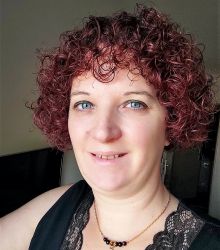
Paméla HARTMEYER
Technicien(ne) contractuel(le)
 École Nationale Supérieure d'Agronomie et des Industries Alimentaires
Université de Lorraine
 MRCA
MRCA Phone
 +33 (0)3 72 74 41 56
 The GLANISTOX project aims to improve the monitoring of chemical contamination in inland aquatic environments by employing an innovative approach: the study of a top predator, the wels catfish, as an integrated indicator of pollution and the transfer of contaminants within food chains.
Led by Damien Banas (L2A) and Olivier Cardoso (French Biodiversity Agency), this project lies at the intersection of environmental research, ecotoxicological risk assessment and food safety issues relating to products derived from aquatic environments.
The project brings together a scientific consortium comprising the University of Lorraine (L2A), ONIRIS (LABERCA), INRAE (UMR ECOBIOP) and the French Office for Biodiversity, ensuring complementarity between environmental ecology, chemical analysis and risk assessment for the food chain.
More infos

CABARETox is a research project of the MRCA team carried out in collaboration with the OFB (Office Français de la Biodiversité) and the ANSES (Agence nationale de sécurité sanitaire de l'alimentation, de l'environnement et du travail).
This project follows on from the CABARET project, which highlighted the presence of numerous transformation products (TPs) of Phyto-Pharmaceutical Products (PPPs) in the aquatic ecosystems of the headwaters of basins at concentrations often higher than those of their parent molecules. Among these ecosystems exposed to PPPs and TPs, ponds are home to a large biodiversity (avifauna, ichthyofauna, batrachians, etc.) likely to be exposed to these contaminants.
CABARETox will aim to provide information on the toxicity of the PTs most commonly encountered and to assess the health status of aquatic organisms in ponds located in catchment areas selected on the basis of a PPP exposure gradient.
This project, under the scientific coordination of Damien Banas, is positioned at the heart of URAFPA's "water-contaminant" transversal action.
More infos

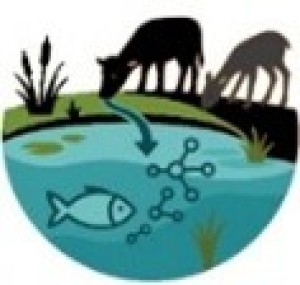
The project Hydro-ecological Conditions for the Emergence of Botulism and Occurrence of Toxins in Ponds (CHABOTÉ) aims to identify the environmental conditions and hydro-ecological mechanisms that favour the emergence of episodes of avian botulism, a disease responsible for significant mortality in many French ponds.
Led by Damien Banas (University of Lorraine, L2A) and Ariane Payne (French Office for Biodiversity), this project is being conducted in collaboration with ANSES (Céline Richomme and Caroline Le Maréchal) and the Marais d'Orx and Lac du Der nature reserves. The project is based on in situ monitoring and analysis of flows between biotic and abiotic compartments in lentic ecosystems, including the Der and Marais d'Orx ponds, which are currently affected, while the ponds in Lorraine still appear to be relatively unspoilt. In the context of global warming, CHABOTÉ aims to assess the future vulnerability of these systems and to produce knowledge that can be used for the prevention and management of health risks.

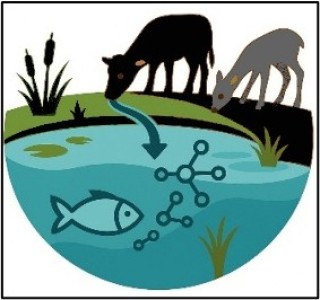
The PNR ESToxine Botulique project aims to understand the environmental, hydro-ecological, bacteriological and ornithological conditions that may lead to the occurrence of avian botulism outbreaks in French lentic ecosystems. It builds on the CHABOTÉ research into the conditions under which botulism occurs and the presence of toxins in ponds.
More infos
The GLAN’EST project aims to deepen our understanding of chemical contamination in aquatic environments in Lorraine, focusing on the Meuse and Moselle river basins, with particular attention paid to the transfer of contaminants within food chains and their implications for the quality of fishery resources.
Led by Damien Banas (University of Lorraine, L2A laboratory) and co-funded by the Rhine-Meuse Water Agency (AERM), this project is a direct continuation of the GLANISTOX programme, of which it constitutes an operational extension at regional level, explicitly integrating the issues of food safety and the utilisation of products derived from aquatic environments.
More infos



Stefan, P., Leglize,P., Garcia, L., Charrois, L., Hartmeyer, P., Fauvet, A., Piutti, S.
Plos one, 1 (xx), pp. 1-27.
Amutova, F., Turganova, R., Gaukhar, K., Gaspard, S., Mamirova, A., Michaux, F., Hartmeyer, P., Soligot-Hognon, C., Djansugurova, L., Jurjanz, S., Delannoy, M.
Journal of Xenobiotics, 14 (1), pp. 267-284.
Stephan, P., Gaspard, S., Dulormne, M., Francoeur, M., Melyon, S., Hartmeyer, P., Rychen, G., Delannoy, M.
Chemosphere, 359 (-), pp. 1-8.
Huchet, K., Masson, J.-D., Soligot-Hognon, C., Hartmeyer, P., Rychen, G., Fournier, A.
Colloque "Chlordécone, Comprendre et agir", 23-25 juin, Schoelcher, Martinique, France
Collas, C., Perreau, J., Jurjanz, S., Hartmeyer, P., Godard, X., Rangassamy, N., Bambou, J.-C., Fournier, A.
Colloque "Chlordécone, Comprendre et agir", 23-25 juin, Schoelcher, Martinique, France
Huchet, K., Masson, J.-D., Soligot-Hognon, C., Hartmeyer, P., Rychen, G., Fournier, A.
Colloque "Chlordécone, Comprendre et agir", 23-25 juin, Schoelcher, Martinique, France
Mailfert, N., Pelfrene, A., Louzon, M., Badreddine, R., Soligot-Hognon, C., Hartmeyer, P., Huguet-Cizo, M., Jurjanz, S., Collas, C.
Colloque "Chlordécone, comprendre et agir", 22-24 juin, Schoelcher, Martinique, France
Turganova, R., Soligot-Hognon, C., Hartmeyer, P., Jurjanz, S., Delannoy, M.
5ème Rencontres des Sites et Sols Pollués, 04-05 février, Paris, France
Huchet, K., Hartmeyer, P., Rychen, G., Fournier, A.
Journée scientifique de l'école doctorale SIReNa, 05 mars, Vandœuvre-lès-Nancy, France
Delannoy, M., Le Roux, Y., Gaspard, S., Fournier, A., Hartmeyer, P., Huguet-Cizo, M., Soligot-Hognon, C., Jurjanz, S., Piutti, S., Rychen, G., Feidt, C.
Rencontres Chlordécone, connaître pour agir, 12-14 décembre, Le Gosier (Guadeloupe), France
Collas, C., Gourdine, J.-L., Beramice, D., Hartmeyer, P., Badot, P.-M., Feidt, C., Jurjanz, S.
Rencontres Chlordécone, connaître pour agir, 12-14 décembre, Le Gosier (Guadeloupe), France
Stephan, P., Amutova, F., Le Roux, Y., Gaspard, S., Feidt, C., Huguet-Cizo, M., Hartmeyer, P., Soligot-Hognon, C., Jurjanz, S., Rychen, G., Delannoy, M.
Rencontres Chlordécone, connaître pour agir, 12-14 décembre, Le Gosier (Guadeloupe), France
Stephan, P., Le Roux, Y., Gaspard, S., Michaux, F., Feidt, C., Huguet-Cizo, M., Hartmeyer, P., Soligot-Hognon, C., Rychen, G., Delannoy, M.
Rencontes Chlordécone, connaître pour agir, 12-14 décembre, Le Gosier (Guadeloupe), France
Thiebaut, J., Feidt, C., Hartmeyer, P., Fournier, A.
Rencontres Chlordécone, connaître pour agir, 12-14 décembre, Le Gosier (Guadeloupe), France
Thiebaut, J., Fournier, A., Hartmeyer P., Delannoy, M., Feidt, C.
Séminaire annuel de l'Ecole Doctorale SIReNa, 08 mars, Vandoeuvre Lès Nancy, France
